
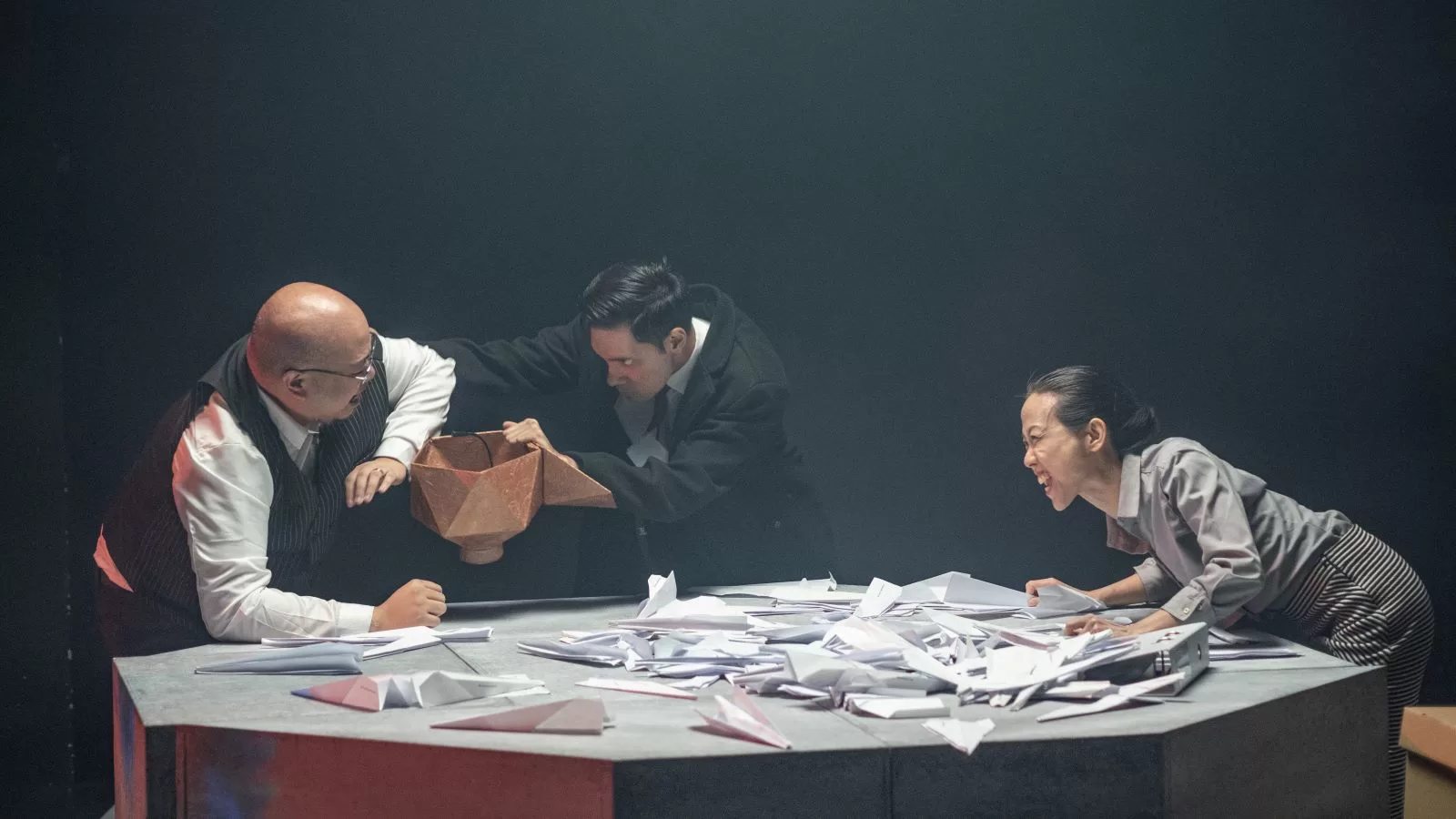
This review of DPAC’s POLY (2025) was originally published on Artsee Networks (12 February 2025).
Absurdist theatre is always a brave endeavour considering they risk alienating an already limited audience, even more so considering Malaysia’s modest theatre community. Failing to connect, audiences will have tiredly sat through an hour and a half of ‘nonsense’ and ‘nothing’, and for not an inexpensive price either.
However, in those instances where it does work, where the nonsensical becomes sensical, it produces an evocative and memorable experience that is truly unique and special.
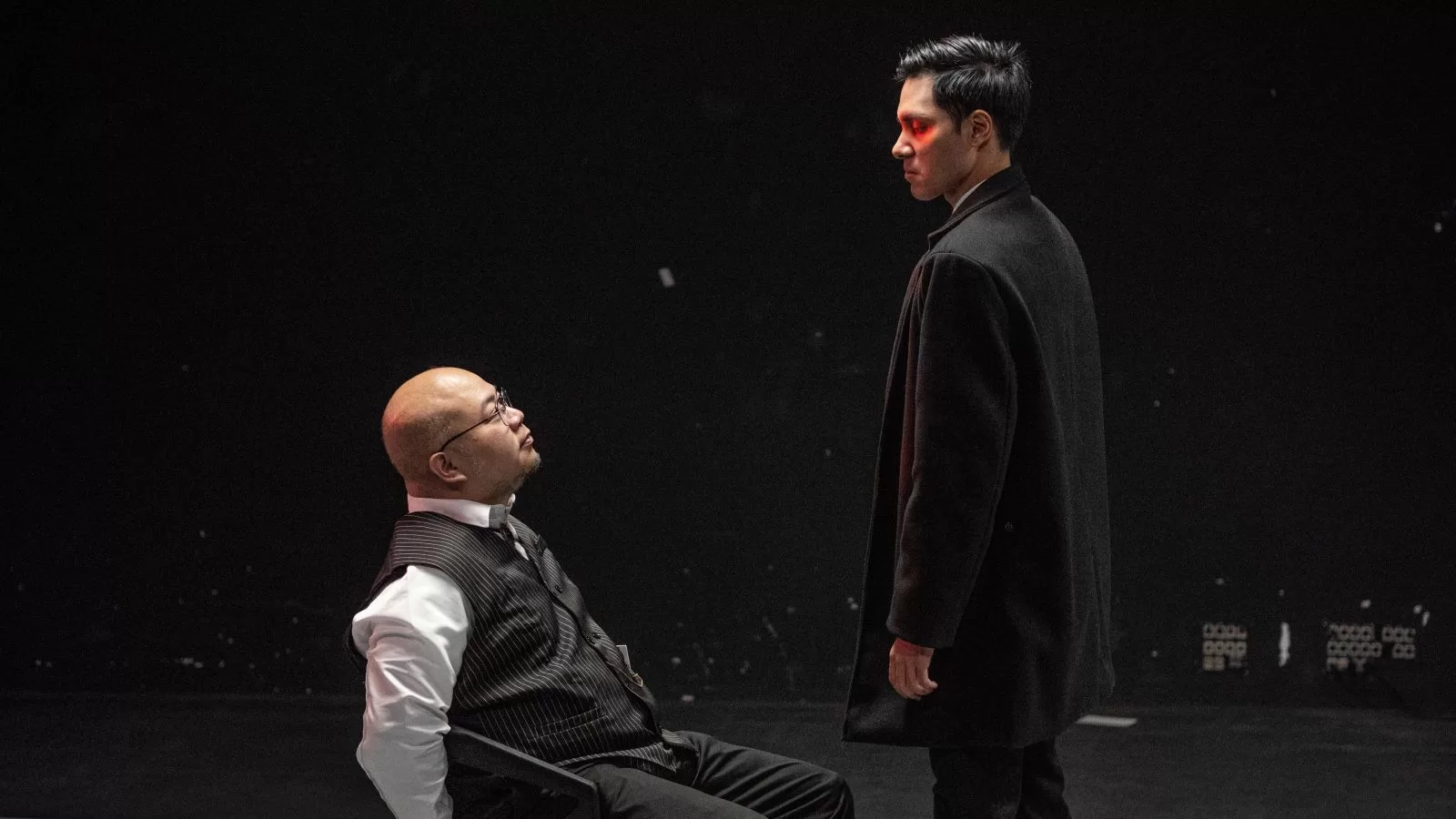
POLY is one of these instances, where absurdism and surrealism creates an amazing narrative of Malaysian theatre that keeps audiences engaged, confused, laughing, and scared.
The show is directed by Cheong Chua and written by Ian Skatu, being the playwright’s first full-length play. It follows three distinct absurdist and surrealist stories: Polygraph, Polygon, and Polygamy.
Starring Omar Ali, Engku Armand, Sandee Chew, and Anne James, the four-member cast play various characters within each of the stories, each displaying impressive range, with some clear standout performances. There is also a new special guest for every show, appearing in a small cameo role.
Coming into the dark and smoky theatre, you’re greeted with this imposing, industrial-grey set, beautifully designed with pertinent polygonal design elements. The brutalist architecture creates an immediate palpable tension, and is a testament to Scenic Designer Adry Nasution’s brilliant vision and creativity.
Polygraph
While the stories were definitely strange, they had familiar elements that audiences could cling on to: Polygraph’s detective thriller plot reminded me of Se7en, the cultish, feral people in Polygon gave me Lord of the Flies vibes, and Polygamy had the the domestic drama of Unfaithful with strange sci-fi elements.
The first story, Polygraph,started out not just slow, but strangely cliche, with dialogue and lines you’ve heard in every procedural drama of the past twenty years. Omar Ali, playing the suspect, and Engku Armand, the detective, delivered adequate performances considering their characters were actually two bundles of tropes from the crime thriller genre.
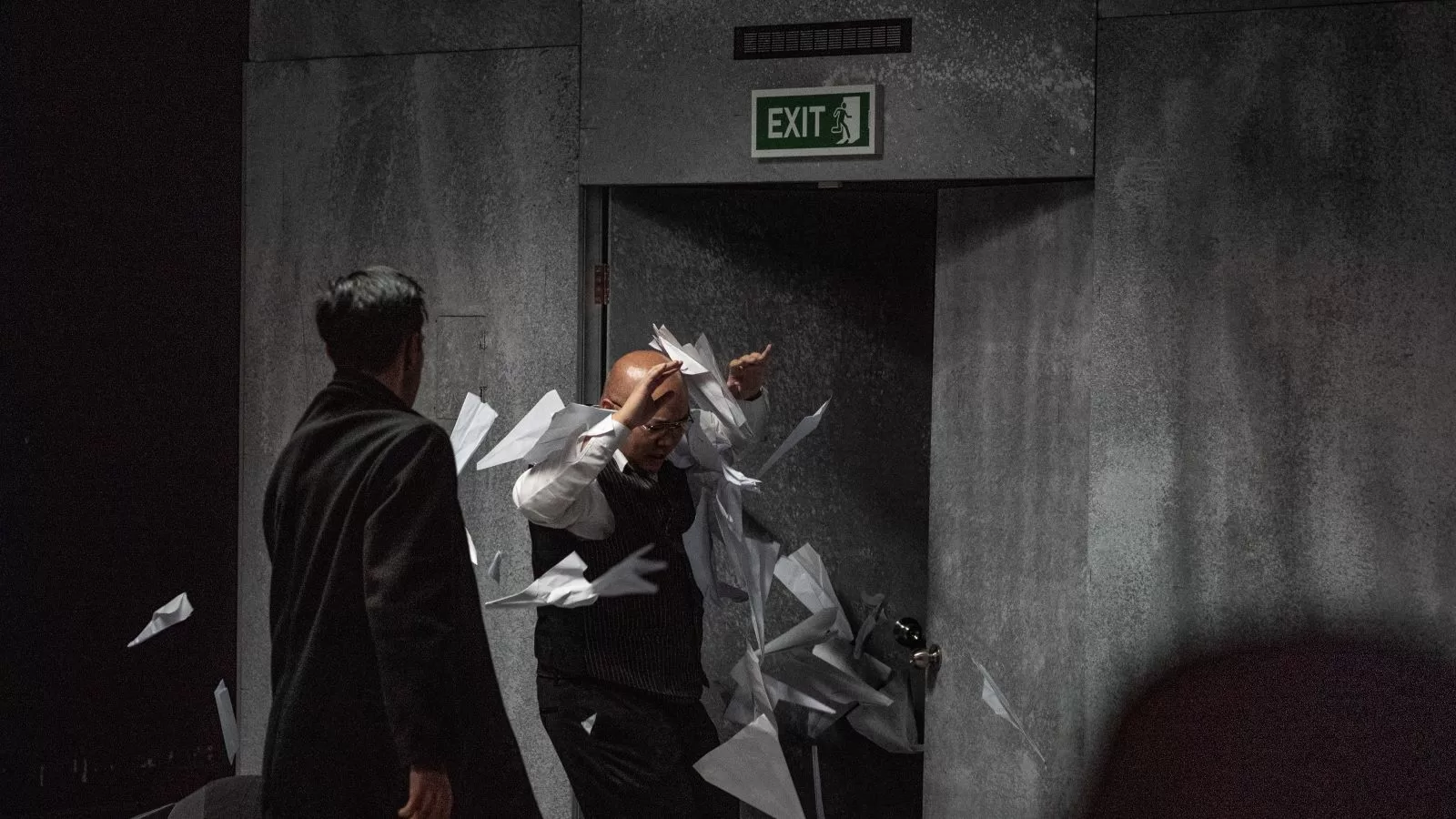
For a show that promised to be absurd, this seemed a weak start. It was only with the introduction of the paper airplanes that Polygraph really started to come into its own. This introduction of an otherworldly element suddenly amplified the story to a degree that caught my attention.
Tensions and suspense suddenly spiked, and we became engrossed in the fascination of Sandee Chew’s enigmatic character as well as the cat-and-mouse chase between suspect and detective. It culminates in an intense, high tension final act that would set the tone for the rest of the show.
Polygon
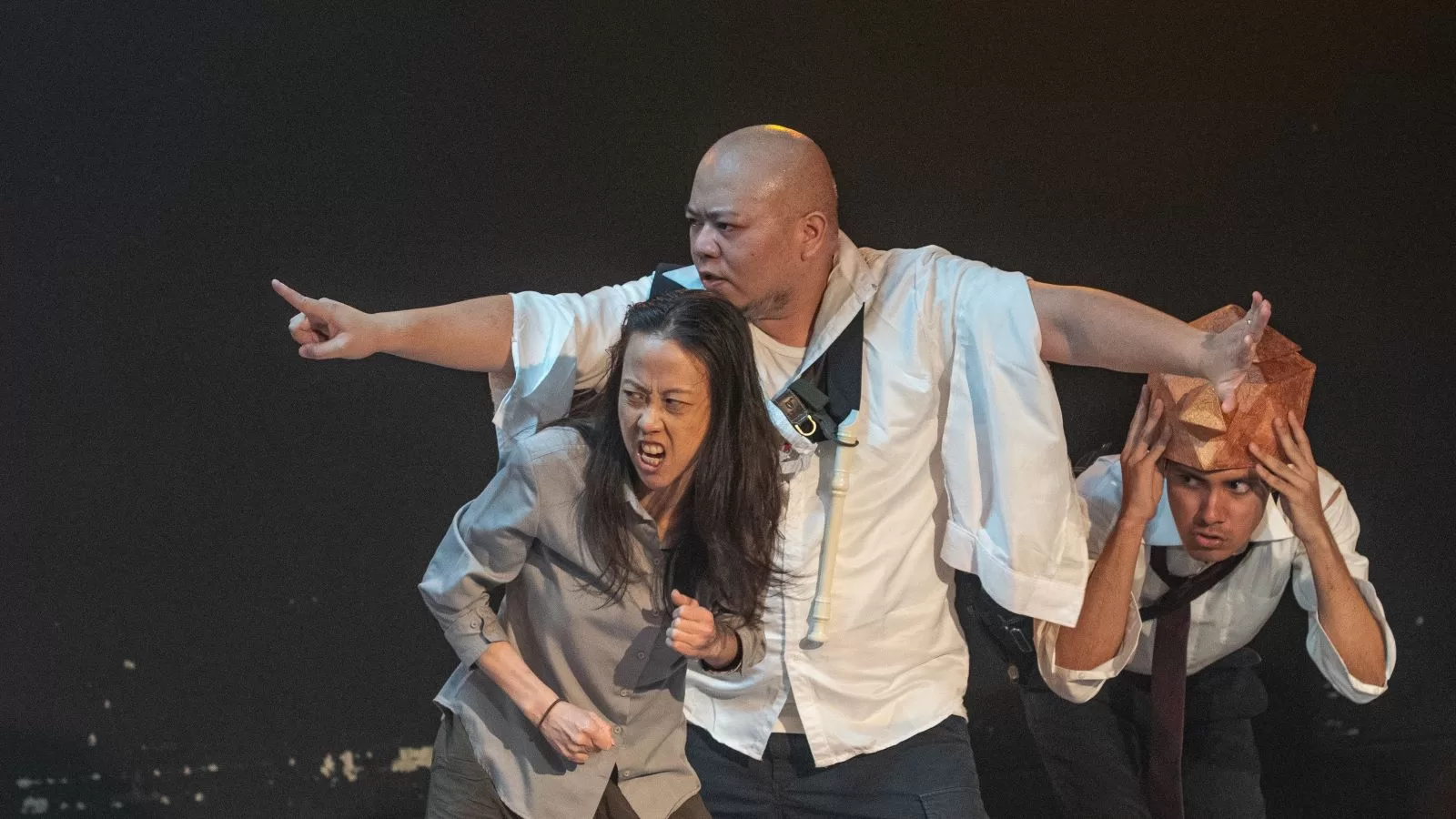
Polygon is essentially 30 minutes of Anne James looking befuddled. This is not a complaint, but in fact its selling point. Omar Ali, Engku Armand, and Sandee Chew play strange, feral members of a cult obsessed with materialism who are stumbled upon by Anne James’ character.
I felt it actually suffered from the opposite problem of Polygraph, in that it started too absurd. The cult members talk in this almost-gibberish language that bordered on the edge of obnoxiousness. It shed the serious tone of the first story in favour of a more comedy-centric one, with a particular focus on Anne James’s character.
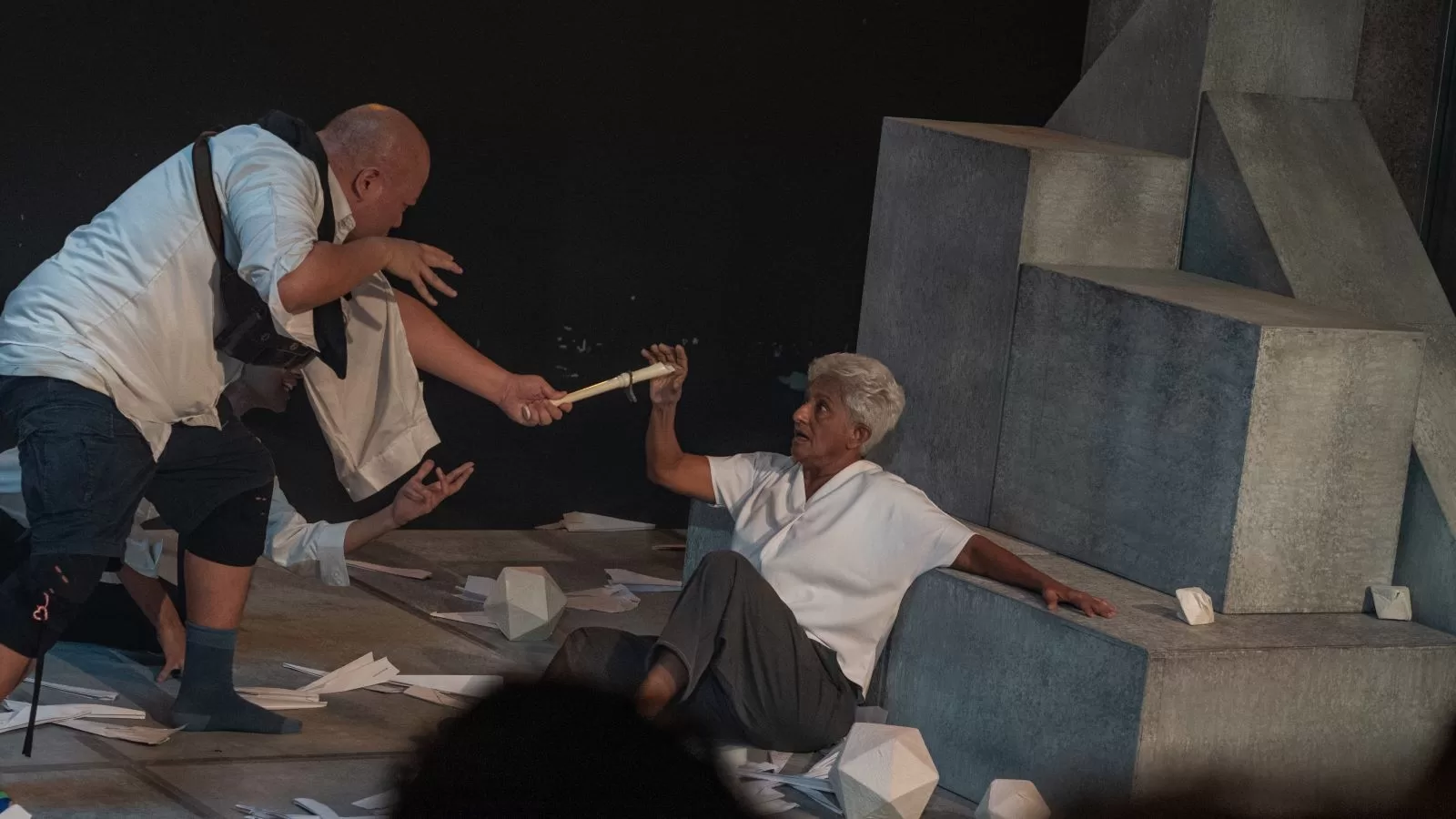
Not to say that the cult members weren’t amusing in themselves, but Anne James’s straight man character was essential in producing a hilarious contrast. In a show rife with profanity, it was Anne who truly weaponised her f*cks and sh*ts to the optimum degree, eliciting laughter each time with her precise timing and delivery.
It was also during this story that the special guest makes an appearance, playing a small cameo role. For the show on Friday, 7th February, our special guest was Jerry Pang, which marked a small theatre reunion of sorts between him and Omar Ali, both of whom starred in last year’s The Actors Studio production of The Sisters Soong.
Polygamy
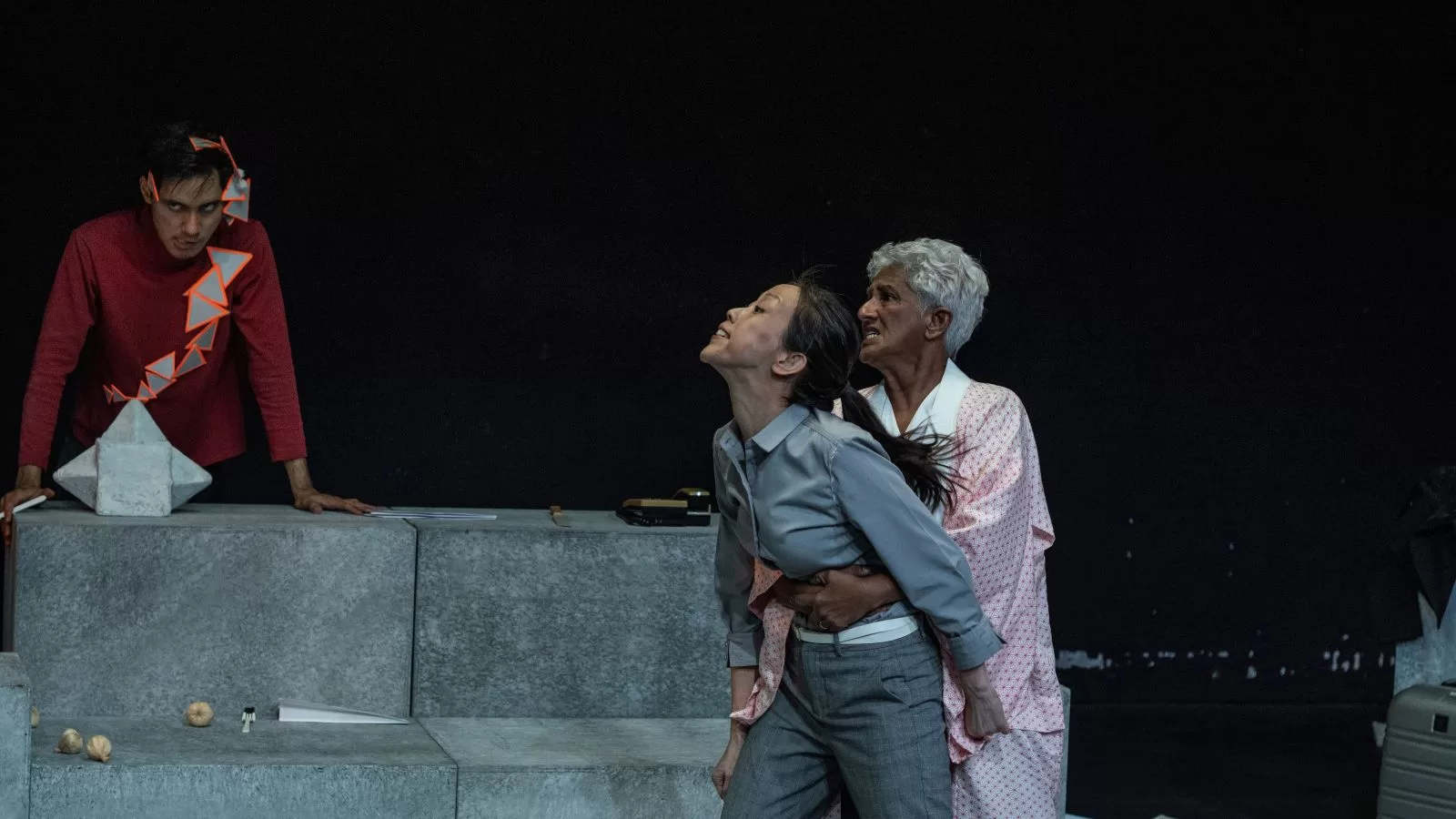
The four actors in the play each had a distinct, exceptional performance in one of the stories that they could truly call their own: Omar Ali and Engku Armand’s cat-and-mouse detective and murder suspect in Polygraph were theirs, Anne James’ baffled character in Polygon was hers, and in Polygamy, Sandee Chew definitively stole the show.
Her role as the distraught lover, filled with so much frustration, grief, and weariness, was the perfect driving force for this story. She could be funny when she needed to be, and tragic when the story demanded it.
It was also the first story where I felt they did everything right, from the intriguing beginning to the puzzling ending, delivering a truly strange and captivating narrative that sits neatly within the realm of the absurd.
Ian Skatu’s use of chronological manipulation, jumping from past to present to future, was excellently executed, creating this discombobulating sense of time that never felt overly confusing.
Brilliant Absurdist Storytelling
I left the theatre feeling incredibly satisfied, despite thinking, objectively, I shouldn’t have been? My questions at the beginning of the stories weren’t answered, I was never really sure of what happened in that second story (where did those cult members come from?), and what was that McGuffin device all of the characters seemed to obsess over?
But all these questions, and all the answers I don’t have for them, never seemed to negatively affect my reception to the play. In fact, they enhanced it. I like the mystique of never being able to feel like I truly understand the play, I like that I’m still thinking about it days later what certain scenes mean and who certain characters were meant to represent.
And I especially liked how the stories progressed in a manner that slowly embraced its own absurdity, from the serious and gruff Polygraph, to the fourth-wall breaking and off-the-wall concept of Polygamy.
POLY is a brave and brilliantly executed absurdist play, an impressive debut from Ian Skatu, and a commendable directorial effort from Cheong Chua in realising his playwright’s shocking vision. It deserves more attention than it’s getting, which is unfortunately a common occurrence in Malaysian theatre.
The play is showing in DPAC’s Black Box Theatre from 6th to 16th February 2025. Tickets are available from CloudJoi and start from RM64.23.

Leave a Reply